1099 vs W-2: what the difference means for your taxes
The real difference between a 1099 contractor and a W-2 employee, who pays which taxes, and what each form means when you file.
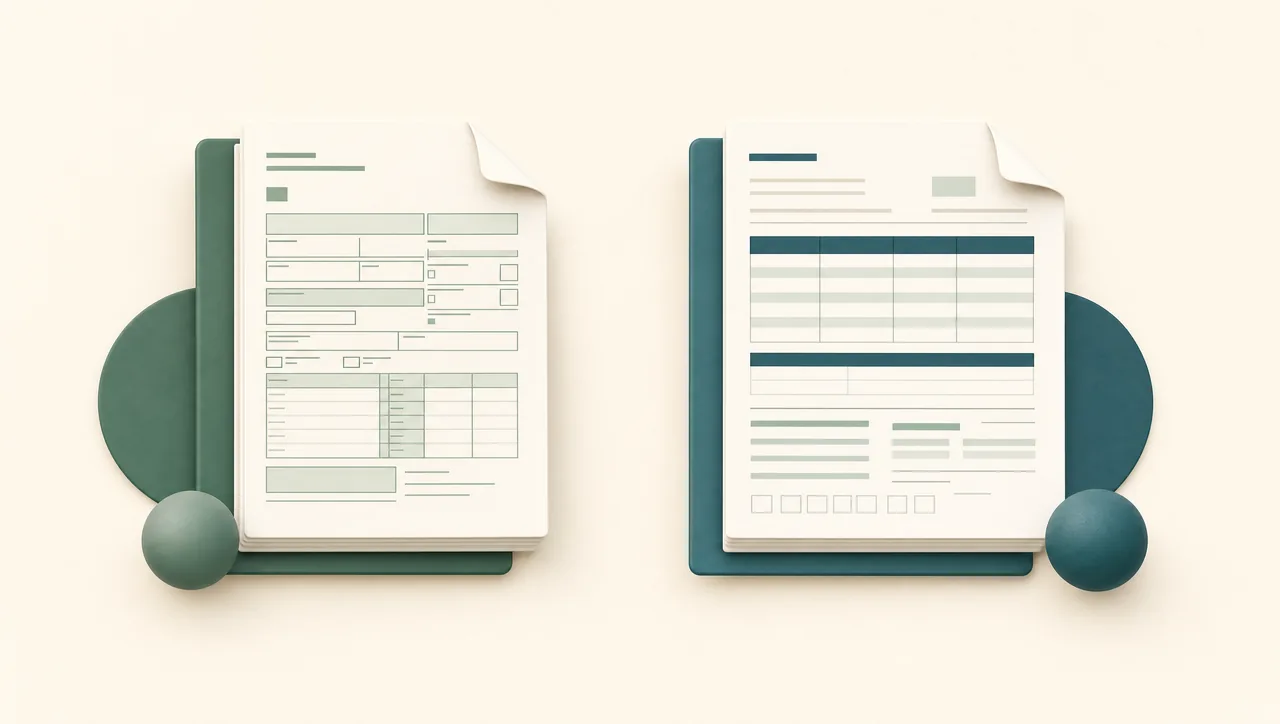
If you have ever been paid for work, you have probably seen one of two forms at tax time: a W-2 or a 1099. They look similar and both report income, but they describe very different relationships, and they change who is responsible for paying tax. Understanding the difference saves a lot of surprises in April.
What each form actually reports
A W-2 reports wages paid to an employee, along with the federal and state tax, Social Security, and Medicare already withheld from each paycheck. A 1099 (most commonly the 1099-NEC) reports money paid to an independent contractor, with nothing withheld. The number on a 1099 is gross: no tax has been taken out yet.
Who pays which taxes
- W-2 employee: your employer withholds income tax and pays half of your Social Security and Medicare, you pay the other half automatically through payroll.
- 1099 contractor: nobody withholds anything, so you owe income tax plus the full self employment tax (both halves of Social Security and Medicare) yourself.
- The self employment tax is the part that surprises people: it is roughly 15.3 percent on top of regular income tax.
This is why a contractor who earned the same headline number as an employee can owe far more at filing. The contractor never had tax taken out along the way, and they carry a tax the employee split with their employer.
The upside of being a 1099 contractor
It is not all downside. Contractors file a Schedule C and can deduct ordinary and necessary business expenses (software, mileage, a home office, supplies) directly against that income. An employee generally cannot. Clean books make those deductions easy to capture, which meaningfully lowers the bill.
What to do if you get a 1099
- Set aside a portion of every payment for taxes, since none is being withheld for you.
- Track your business expenses all year so your deductions are ready at filing.
- Plan for quarterly estimated payments if you expect to owe a meaningful amount.
- Keep contractor and personal spending separate so your Schedule C is clean.
A W-2 hands you a number with the tax already handled. A 1099 hands you a number and the responsibility that comes with it.
If your income is mostly 1099, treat tax as a year round habit, not an April event. Categorize as you go, set money aside, and the form stops being a shock.